How to Prep Your Production Book
Bryan Runion ·
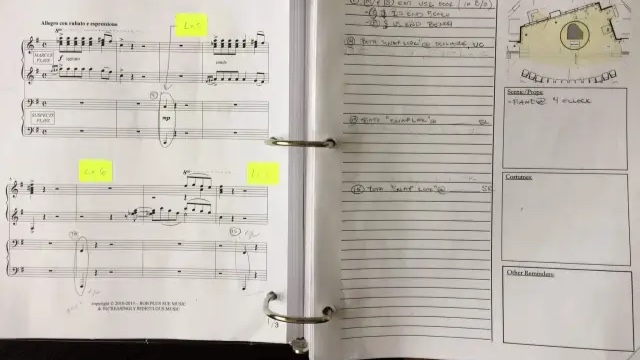
Learn how to organize your production book as a stage manager, with tips, templates, and must-have sections for every phase of the show.
A production book isn’t just a binder, it’s your command center. Whether it’s digital or physical, your book holds the structure, records, and tools that help you manage chaos with calm. Done right, it’s more than a folder of forms. It’s a reflection of how you lead. If you're looking for a full overview of what stage management involves beyond paperwork, check out the Stage Management 101: The Complete Beginner’s Guide.
In this guide, we’ll walk through how to prep your production book step-by-step, what to include, and how to make it work for you, not just for the paperwork.
What Is a Production Book (and Why It Matters)
A production book is a centralized, organized collection of materials you use to run a show. It houses everything from contact lists and calendars to cue sheets and blocking notes.
It helps you:
Stay prepared and credible during meetings
Document changes, conflicts, and wins
Share information across departments clearly
Call the show with confidence and precision
It’s more than a reference. It’s your institutional memory. When questions come up about decisions made weeks ago, your book is the archive. When someone needs clarity mid-tech, it’s your go-to. And when someone else steps in mid-run, it’s your handoff.
Your book should be clean, up-to-date, and accessible. Whether you use a binder, an iPad, or a Notion dashboard, what matters is how it performs under pressure — not how pretty it looks.
What to Include in Your Production Book
Here’s a breakdown of the key sections every SM book should contain. Each one serves a different purpose, but together they support the full arc of production.
1. Contact Sheets
Full cast, crew, creatives, and producing team
Phone numbers, emails, pronouns, emergency contacts
Grouped by department, ideally color-coded or labeled by role
Include preferred names, availability notes, and any special considerations
2. Rehearsal Calendar and Daily Schedules
Start with a master calendar (rehearsals, tech, previews, opens, etc.)
Break it down into weekly and daily schedules as things evolve
Keep older versions archived to show progression or answer "when did we change that?"
3. Script and Cue Notation Pages
Most current script version, with clear revision history if possible
Blank or semi-filled cue sheets (lighting, sound, deck, video, etc.)
Create margin space for notation — leave room for changes and notes during tech
4. Blocking Pages
Use blank stage diagrams or grid paper to track movement
Keep records of entrances/exits, prop handoffs, traffic patterns
Note actor preferences or limitations — these are part of how you support them onstage
5. Reports and Forms
Rehearsal and performance reports (daily)
Incident and injury reports, when needed
Time sheets or sign-in logs if you manage crew calls
Meeting minutes from production meetings and design reviews
6. Show-Specific Documents
Costume and quick-change plots, prop lists, scenic tracking
Venue specs, load-in/load-out notes, hospitality info
Cue placement maps (like mic handoffs, trapdoor triggers, etc.)
Include union rules or venue policies if they govern how you work
Related: 5 Things Every Stage Manager Should Bring to First Rehearsal
Digital vs. Physical: Which Should You Use?
Physical books offer:
Tangibility and speed in high-pressure moments
Quick markups and a tactile workflow
Fewer tech dependencies or learning curves
Digital books offer:
Portability and easy sharing across teams
Searchable content and duplication for future shows
Automatic backups (if cloud-based)
Many SMs use both. A physical binder at the table and a cloud-based backup is a solid hybrid model. If you go fully digital, set strict version control and make sure offline access is available.
How to Build and Organize Your Book
Start with a table of contents. Divide sections clearly. Use tabs or colored folders for quick flipping. If you’re digital, design a clean, intuitive folder structure.
Label everything consistently. Clarity = credibility.
Use templates to save time and reduce mental load. You don’t need to reinvent every form.
Leave room for show growth. Add a "Misc" section where evolving pieces can live until they settle into their own category.
Back it up. If your book falls in a puddle or your hard drive dies, you need to recover fast.
Pro tip: Always have a go-kit version ready — the top 10 pages you'd need if called into a crisis meeting or to cover a show on short notice.
Final Thought
A production book isn’t about aesthetics, it’s about accuracy, clarity, and service. When your paperwork reflects how you think, how you lead, and how you show up for others, it becomes more than admin. It becomes a tool for trust.
📌 Join the Half-Hour Newsletter for downloads, tools, and behind-the-scenes insight.
For a deeper dive into the anatomy of a prompt book—what it looks like, how it’s structured, and how it’s used backstage—check out this breakdown at Theatrecrafts.